Calibrating your property monitor settings ensures you’re only receiving alerts when something serious is happening in your unit.
You’re able to increase/decrease the thresholds for the four following data points: noise, occupancy, temperature, and humidity.
Each unit has inherently different baselines depending on externalities within and surrounding the unit. For example, a loud air conditioner within the unit, or a major highway running behind the unit can greatly influence the baseline noise levels of the room before a guest even enters the front door.
To avoid receiving unnecessary alerts, ensure you're setting the thresholds according to the baseline levels of each unit.
Additionally, avoid placing your sensor near a window to ensure you don't receive alerts for high temperatures due to direct sunlight.
There are two steps to calibrate the Operto Property Monitor:
Step 1: Ensures the Netatmo device itself is correctly calibrated
In the Netatmo app, go to:
Settings > Advanced settings > Unit Name > Calibrations > Recalibrate
Once the manual calibration request has been made, do not disconnect the main module from its power supply or remove the batteries from the Additional Smart Indoor Modules for 8 consecutive hours.
Be sure to leave auto-calibration enabled.
Step 2: Ensure your alerts are set according to the environment within each unit
1.) Login to your Operto dashboard and select the specific unit you're looking to calibrate.
2.) Click on Property Monitor and analyze the 2 graphs associated with each of the data points:
- Noise
- Occupancy
- Temperature
- Humidity
Each data point displays a graph of the last 4 hours and the last week. Review the historical patterns and set your thresholds appropriately.
Please note:
- The occupancy thresholds in a poorly ventilated 500 sq ft apartment will likely be higher than in a well ventilated 1500 sq ft home.
- An unoccupied room typically has CO2 levels between 350-500 ppm. Each additional person will cause an incremental lift that will vary based on ventilation and how long they have spent in the unit.
- Many health authorities worldwide are setting a 1,000ppm threshold as a minimum requirement for indoor air quality (in non-residential buildings). Studies are showing that concentration capabilities can be affected when CO2 levels are rising above 1,000 ppm. Over 2,000ppm CO2 can also cause lower sleep quality and headaches.
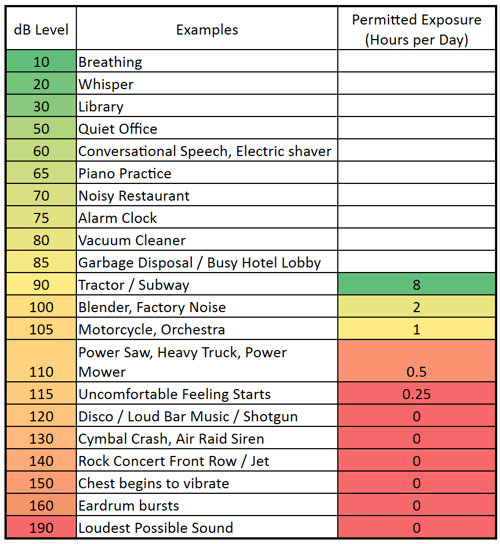
Below are reference points for you to set up the noise threshold: